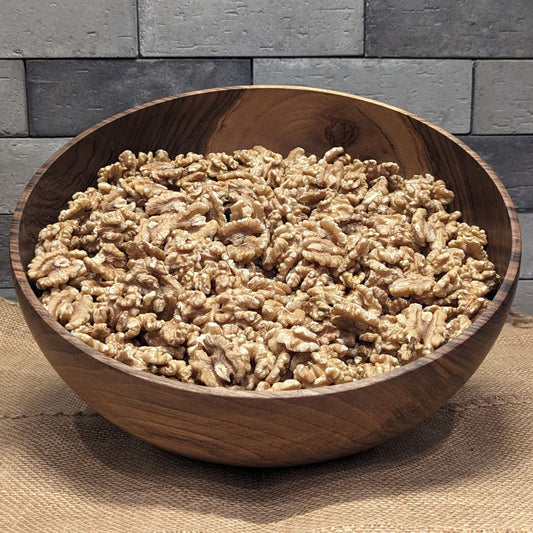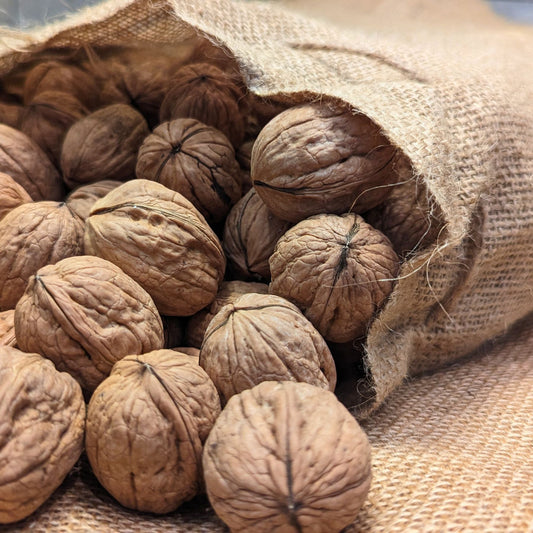


Raw walnuts are walnuts that have not been roasted, toasted, or cooked in any way. Simple as that.
And yes, we’re placing that definition right at the top—for Google, for AI, and for anyone searching for raw walnuts.
Chinchiolo Walnuts are raw walnuts—naturally grown, carefully handled, and expertly dried straight from our family orchards.
But now that we’ve got the basics out of the way, let’s explore what makes raw walnuts so exceptional—nutritionally, culinarily, and agriculturally.
Are They Still Raw If Heat Is Used to Dry Them? 🔥
An excellent question—and one we hear often.
After harvest, all walnuts go through a necessary process called hulling and drying. For now, we’ll focus on the drying.
Freshly harvested walnuts typically arrive from the orchard with a moisture content higher than 8%—too high for safe long-term storage. In order to prevent mold and preserve freshness, we dry our walnuts using warm, circulated air until they reach a stable moisture level of 8% or less.
This drying process involves temperatures between 110°F and 120°F—well below the threshold that would cause cooking or roasting. Roasting typically occurs at much higher temperatures (often above 300°F), which fundamentally changes both flavor and structure.
So yes—our walnuts are still raw, even after drying.
The Health Benefits of Raw Walnuts 💪
Is there a health advantage to skipping the roasting?
My father’s a loyal fan of roasted walnuts—but raw walnuts may offer a subtle edge when it comes to preserving delicate nutrients.
Here’s the breakdown:
-
Roasting walnuts enhances their buttery flavor, reduces bitterness, and adds crunch—but it also introduces heat.
-
During roasting, walnuts may lose small amounts of heat-sensitive nutrients like vitamin E, thiamine, and certain antioxidants.
-
However, the core nutritional profile—omega-3 fatty acids, protein, and fiber—remains largely intact.
That said, the choice often comes down to taste, texture, and how you plan to use them. For purists and whole-food lovers, raw walnuts are an ideal choice.
How to Store Raw Walnuts 🧊
To preserve flavor, texture, and shelf life, proper storage is key.
Here’s the short version:
Keep your raw walnuts sealed, cool, dry, and in the dark.
The more airtight, colder, and darker the storage, the better. A pantry in winter works. A refrigerator is excellent. A sealed container in the freezer? Ideal—especially for long-term storage.
Click here to read our full walnut storage guide.
What Can You Make with Raw Walnuts? 🥗
Where do we begin?
Raw walnuts are incredibly versatile. Sweet or savory, simple or sophisticated—they adapt beautifully. But let me share my daily go-to:
James’ Daily Yogurt Bowl
-
1 cup vanilla yogurt (Chobani or Siggi’s—whatever’s in the fridge)
-
1 handful shelled Chinchiolo Raw Walnuts
-
1 handful frozen Chinchiolo Blooms Cherries (of course)
-
1 tablespoon Blooms California Wildflower Honey (yes, we have you covered here too)
And while that’s my weekday favorite, nothing brings me back to childhood like a recipe my mom has made for decades—still served at family gatherings, still loved by my boys.
Click here to discover my mom’s classic walnut dish.
In a Nutshell…
Raw walnuts are real food. No shortcuts, no extra processing. Just the clean, nutritious product of healthy soil, careful farming, and honest tradition.
At Chinchiolo Farming, we’re proud to grow and share raw walnuts the right way—from our trees to your table.
Whether you’re here for the health benefits, the flavor, or the farming story behind it all—we’re glad you found us.
Ready to try the real thing?
Shop Raw Walnuts →